Showing posts with label Business. Show all posts

Apr 14, 2016

How to create a Smart City Strategy and its Implementation?


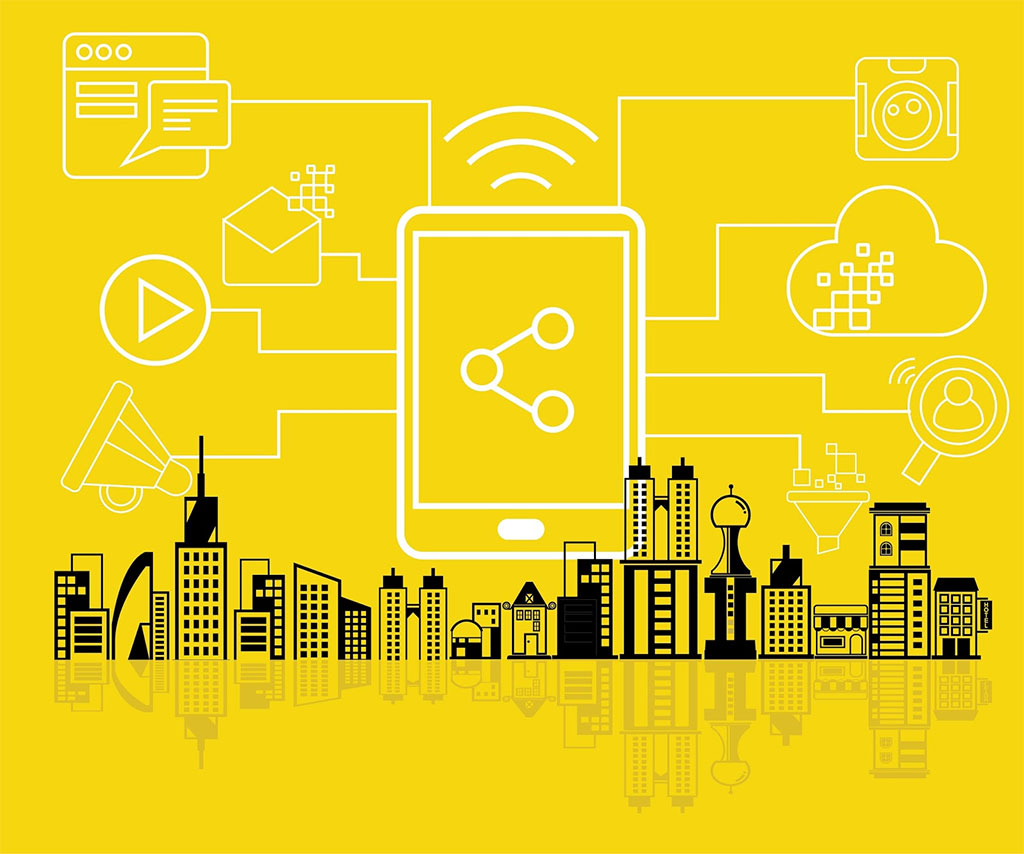
Smart city strategy and implementation evolves with technological advancements achieved over rapidly developing global spectrum of research and developments in the field of Machine 2 Machine (M2M), Internet of Things (IoT) and moving onto Internet of Everything (IoE).

Through various online resources available it is a clear indication of the direction which a technology company needs to take if it wants to be in the league of the highly lucrative IoE domain, which considering economies of scale, is a prime index to determine the return on investments.  End of the day, the initiatives undertaken by pioneers in the IoE spectrum is to ensure that they benefit commercially at a global scale, gaining with the first mover’s advantage. As it is in the case of many internationally acclaimed corporates, IoE is the next phase they foresee for their rapid growth and diversification of business with a global footprint. 

Companies must embrace latest and evolving technologies accessible in order to remain competitive in the coming years. Enhanced hybrid internet connectivity, redundant and high available big data solutions, robust platforms run on cloud computing and integrating to the social media with a wide reach may be identified as major forces to ensure competing capabilities.

As per statistics published by Gartner; in comparison with year 2009, it is estimated that the total IoT units devices globally will reach 26 billion by the year 2020.  This directly accounts for an exponential surge in the smart devices and would account to the need for high available and reliable infrastructure and bandwidth to handle the IoT growth.

Key stakeholder in smart city strategy formulation and implementation would be the end user and is a focus while designing smart city platforms to ensure appealing user interfaces which provide complex data structures analyzed through intelligent analytic tools and portrayed onto dashboards which would be easy to use and interpret. Collation of all sub-systems in a city-level deployment of smart city ecosystem is an evolution of large scale Information Communication Technology (ICT) solutions catering various needs and functionalities that demand enhancement in efficiency and sustainable resource utilization yet available readily to use by each and every resident of the city.
Happiness index factor is a key measure and target of development of policy makers who undertake strategic decisions of a sustainable city level development initiative. This is highlighted in the World Happiness Report 2013. 

On March 05th 2014, Dubai formulated a strong far-sighted strategy with tangible milestones to transform itself into a “Smart City”. Considering that there are more than 180 nationalities living in Dubai, the transformation to adopt latest technologies directly carry huge impact in enhancing the life standards of the people residing in Dubai. The role of smart city initiative and its related developments keeping in view the Expo 2020 is vital to future developments in the region.  Introduction of ministries for happiness, tolerance and future is a clear and indicative direction to ensure that the milestones and vision of Dubai is met. A three-year timeline was set by the governance to ensure that Dubai Smart City project will be in track and following which Dubai will be the world’s smartest city by the year 2017.

Pacific Controls has pioneered the artificial intelligence framework developed for virtualization of managed services and for the delivery of real time business intelligence with its “Galaxy 2021” the Internet of Things platform. This ground breaking technology from Pacific Controls offers the world the opportunity to leverage the ubiquitous platform, Galaxy 2021 for IoT infrastructure and Smart City management applications. Pacific Controls’ Galaxy 2021 is the world’s first enterprise platform delivering city centric services for management of its ecosystem comprising of Agriculture, Airports and Aviation, Education, Healthcare, Government, Energy, Financial Services, Hospitality, Manufacturing, Ground Transport, Logistics, Marine Ports, Oil and Gas and Residential.


Visit for more details : http://pacificcontrols.net/


Apr 7, 2016

PCS Digital Business HUB and API Economy


What is PCS Digital Business HUB?

Pacific Controls (PCS), a leading provider of Internet of Things (IoT) managed services solutions globally and Middle East’s largest Tier 3 secure data center / cloud services provider, has collaborated with WSO2.Telco, creator of a ground breaking digital enablement platform, to launch Middle East’s first Digital Business Hub. The Digital Business Hub will also contribute towards the acceleration of the on-going transformation of Dubai into the world’s most advanced and connected Digital Marketplace. 

The PCS Digital Business HUB is a ground breaking digital enablement platform, which is designed to enable enterprises, MNOs(Mobile Network Operators), government and individuals to transform the way they engage and partner in digital ecosystem by removing many of the barriers by providing API and Identity as a service hence positively affect an organizations profitability (API Economy). This platform provides a single point of integration, creating a simple, agile, monetizable digital service echo system aimed at connecting government services, enterprises and consumers across Middle East Region.

What is API Economy ? 


API economy is a general term that describes the way application programming interfaces (APIs) can positively affect an organization's profitability. Today, business leaders are aware of the financial impact APIs can have and companies are generating revenue by exposing APIs as business building blocks for third party applications. In the API economy, application programming interfaces (APIs) act as the digital glue that links services, applications and systems. This allows businesses to make the most of their data to create compelling customer experiences and open new revenue channels.
There is disruption happening in global business world over. For example, 50% of business-to-business collaboration will take place through Web APIs by 2017, and by next year 75% of Fortune 1000 firms will offer public Web APIs, according to IT research firm Gartner Inc.
This economy is not separate from the overall global economy, but represents a growing slice of the global economic pie:

Mobile and cloud in particular are pushing increasing amounts of economic transactions from the existing HTML web over to API-driven interactions, even as both continue to grow.

B2B supplier relationships in the form of APIs are also accelerating rapidly, replacing human web-based flows or even older fax/phone-based procurement models.

Multi-channel plays in retail, content and other sectors are all tending towards API-style implementations with many interface points feeding a single transaction process.

For this reason, it is best not to imagine that joining the API Economy would be similar to joining a new economic system. Rather, think of it as maximizing your growth potential in what is likely to become the most important component of the economy.

Life cycle of API Economy


API optimization is continuous based on insights from new customers and usage of APIs. Apps and APIs continuously improve. Product management emerges for APIs as digital products.

API management backbone

API management is the process of publishing, promoting and overseeing application programming interfaces (APIs) in a secure, scalable environment. It also includes the creation of end user support resources that define and document the API.

Technology teams striving for speed and quality needs to invest on a rock solid API management backbone that is, a platform to:


  • Create, govern, and deploy APIs: versioning, discoverability, and clarity of scope and purpose
  • Secure, monitor, and optimize usage: access control, security policy enforcement, routing, caching, throttling (rate limits and quotas), instrumentation, and analytics
  • Market, support, and monetize assets: manage sales, pricing, metering, billing, and key or token provisioning

Your approach joining the API Economy

  • Start by understanding your business context
  • Understand your firm’s role within the open Web
  • Factor in your goals for delivering mobile apps
  • If you will provide APIs, then develop your API design strategy
  • Choose your API management platform
  • Design and deliver APIs consistent with your design strategy
How PCS Digital Business HUB helps you joining the API Economy?

The PCS Digital Business HUB provides enterprises and developers a single point of integration, creating a simple, agile, monetizable digital service echo system aimed at connecting government services, enterprises and consumers across Middle East Region.

HUB Enables multi-operator aggregation, discovery, routing and interconnectivity of services. Aggregates services exposed by other hubs, by gateways, and via direct connections from MNOs. Provides a single point of integration for enterprises and service providers. Comprehensive administration, rating and reporting.

It can also be used to provide hosted Mobile Connect functionality for a Telco group or for a whole country.

Key features and benefits of Digital Business HUB

  • Highly secured API manager
  • API based services will be launched in quick time
  • Single point of integration exposing simple REST APIs
  • Secure layer independent of your core business systems
  • Rapid on-boarding of services and publishing of APIs
  • Choose to publish APIs privately (for internal use), for trusted partnerships or for wider public developer ecosystem
  • Cost effective Opex model using PCS' end-to-end managed cloud delivery infrastructure
  • Easy future migration to dedicated instance with no re-engineering
  • New revenue opportunities for the government and other ecosystem partners/players
  • Governance and policy framework with government engagement to a wider and global audience


Mar 14, 2016

Understanding market needs is the key to developing IoT solutions


I think that client interaction and understanding their needs (which leads to understanding market needs) is one of the key points raised. A larger requirement of IoT is in the smart city space, mostly for us living in the urban world. In order to develop a smart city, different government entities, private entities, public private partnerships are involved to identify requirements, define needs of the city and then design the solution around it. Hence developing/designing something without understanding market/client needs can lead to a disaster.